
 EN
EN
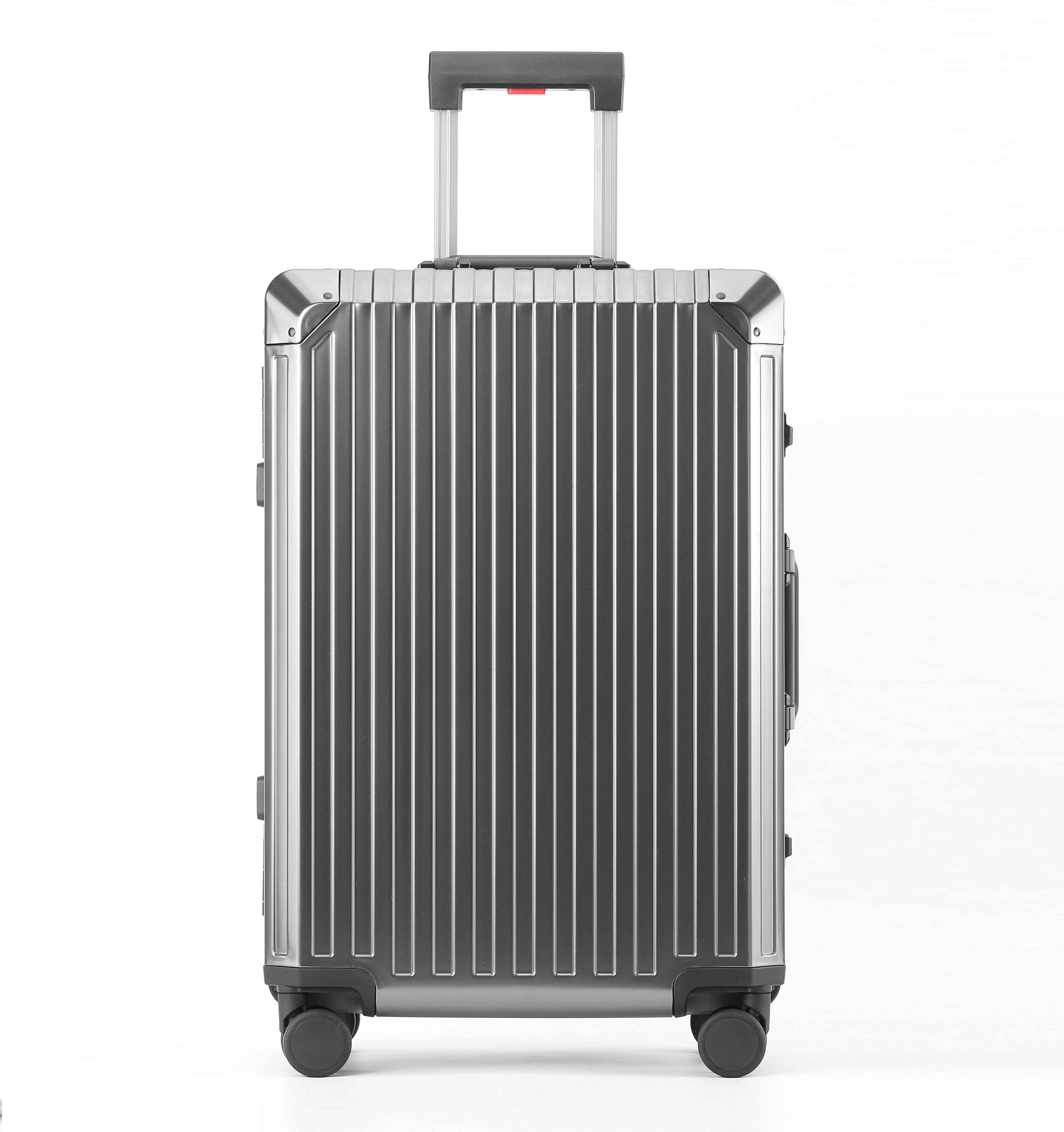
Selecting the right luggage for commercial travel supply needs is a decision that carries more weight than most procurement managers initially anticipate. Whether you are outfitting a corporate travel program, supplying a hotel concierge service, managing a business travel agency, or stocking a retail operation that caters to frequent business travelers, the wrong choice in luggage leads to returns, complaints, and operational inefficiencies. The commercial context introduces requirements that ordinary consumer shopping simply does not address — durability under repeated use cycles, consistent aesthetics across units, ease of maintenance, and compliance with airline regulations at scale.
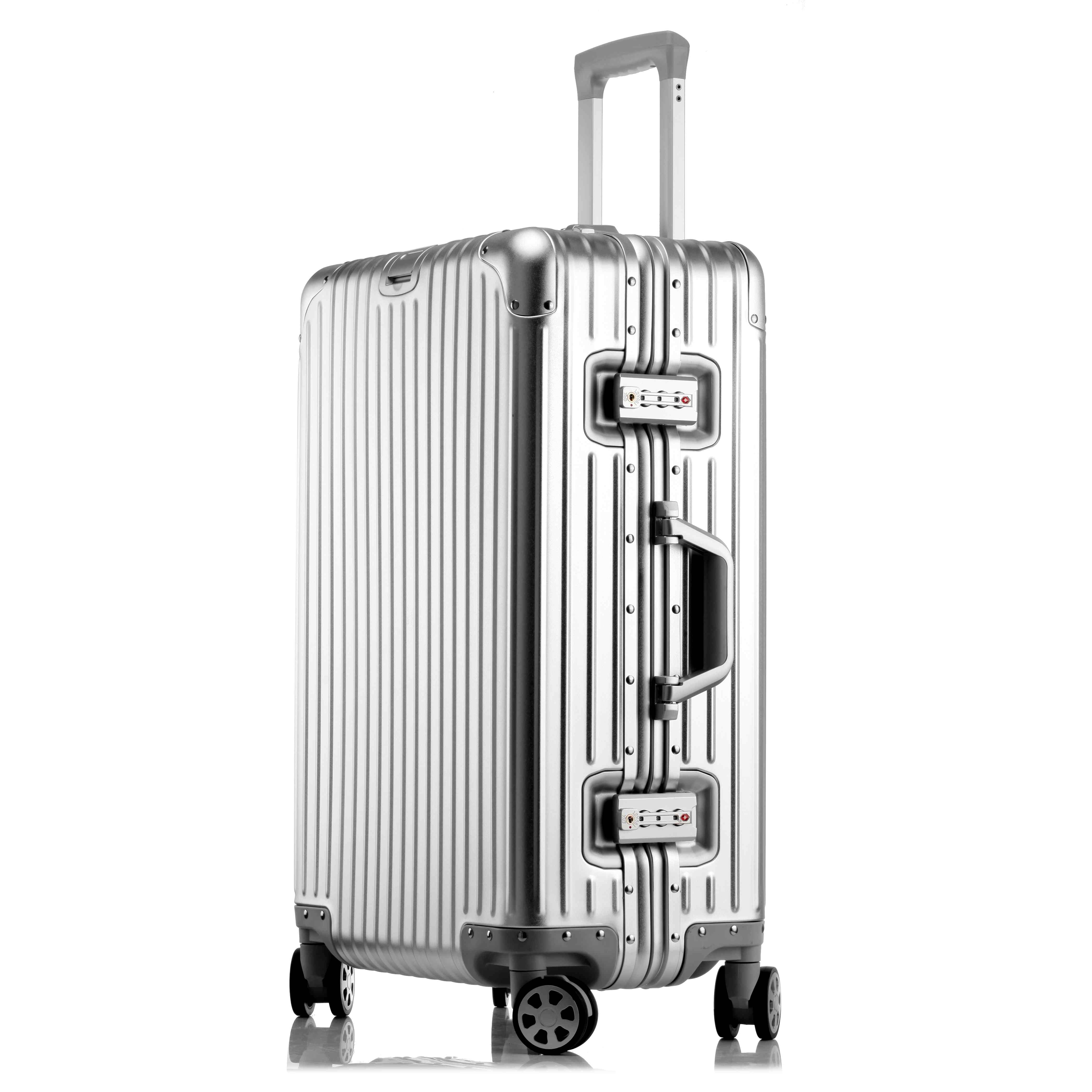
This guide is designed specifically for commercial buyers — procurement officers, travel managers, hospitality sourcing teams, and bulk retail operators — who need a structured, practical framework for evaluating and selecting luggage at scale. From material science and structural integrity to compliance standards and supplier reliability, every dimension of this decision matters. Understanding each factor in context will allow you to make a sourcing choice that serves your organization's operational goals, brand standards, and total cost of ownership over the long term.
Understanding the Commercial Context for Luggage Selection
Why Commercial Needs Differ from Consumer Preferences
Consumer luggage purchases are largely driven by personal taste, price sensitivity, and occasional use scenarios. Commercial procurement operates in an entirely different framework. When you are sourcing luggage for institutional use — corporate gifting, fleet provisioning, hospitality services, or bulk retail — the product must perform consistently across hundreds or thousands of use cycles. A single defect rate of even two percent becomes a significant operational and reputational issue when you are distributing a thousand units.
Commercial supply chains also demand logistical compatibility. The luggage you choose must be stackable for warehousing, consistent in dimensions for transport optimization, and uniform in appearance to meet brand standards. These requirements eliminate a large portion of the consumer luggage market from consideration and highlight why a purpose-built, commercial-grade evaluation process is necessary from the very beginning of sourcing.
Additionally, compliance considerations are more acute in commercial settings. TSA-approved locking systems, IATA-compliant sizing for carry-on and checked baggage, and airline weight regulations are not merely guidelines — they are functional requirements that affect whether your supplied luggage can be used without friction by end recipients. Failing to account for these factors at the procurement stage creates downstream problems that are difficult and costly to resolve.
Mapping Your Commercial Use Case Before Choosing
Before evaluating any specific luggage product, you must clearly define your use case. A hotel that provides in-room luggage for guests on extended corporate stays has different requirements than a travel management company stocking an executive travel kit for a consulting firm. The former prioritizes aesthetic appeal and in-room storage form factor; the latter prioritizes durability, mobility, and consistent performance across diverse itineraries.
Corporate gifting programs often prioritize premium presentation, brand alignment, and perceived value. In this context, the external appearance of the luggage — its material finish, color uniformity, and overall aesthetic sophistication — becomes a primary selection driver. On the other hand, operations-focused use cases, such as equipping field sales teams or providing rental luggage services, demand that durability and functional resilience come first.
Mapping your use case also means quantifying your volume requirements, delivery timelines, and ongoing replenishment needs. Commercial luggage sourcing at scale requires a supplier that can maintain consistent product quality across batches, meet large-order lead times, and provide reliable after-sales support including warranty fulfillment and spare parts availability for wheel systems, handles, and locking mechanisms.
Evaluating Material and Build Quality for Commercial Durability
Hard Shell vs. Soft Shell: A Commercial Perspective
The material choice in commercial luggage sourcing is one of the most consequential decisions you will make. Hard-shell luggage, particularly those constructed from aluminum alloy or premium polycarbonate, offers superior structural protection and a longer functional lifespan under heavy commercial use. Aluminum-shell luggage in particular has become a preferred choice for high-frequency business travel contexts because it resists impact deformation, does not absorb liquids, and maintains its structural integrity over years of active use.
Soft-shell luggage using ballistic nylon or high-denier polyester fabrics offers flexibility and lighter weight, which can be advantageous in certain commercial supply scenarios. However, soft-shell options are generally more susceptible to abrasion damage, moisture penetration, and visible wear over time — factors that matter significantly in commercial contexts where the condition of the luggage reflects on your organization or brand.
For most commercial supply needs, especially those involving business executives, premium hospitality, or corporate gifting, hard-shell luggage provides a more defensible procurement decision. The initial cost differential is typically offset by a longer useful life and lower replacement frequency. When evaluating hard-shell options, prioritize products that use aircraft-grade aluminum or multi-layer polycarbonate construction rather than lower-grade ABS plastics, which crack and chip under commercial-level stress.
Wheel Systems and Handle Mechanisms in High-Use Environments
In commercial luggage procurement, wheel systems are among the most frequently stressed mechanical components and therefore one of the highest-priority evaluation points. Spinner wheel systems — those with 360-degree rotation — are strongly preferred in business travel contexts because they reduce physical strain on users and handle fast-paced airport environments efficiently. However, not all spinner systems are built to the same standard, and commercial buyers must assess load ratings, axle construction, and wheel tread material before making a sourcing decision.
Double-wheel spinner configurations outperform single-wheel designs in commercial applications because they distribute weight more effectively and degrade more slowly under repeated use. For luggage intended for executive or premium business travel supply, look for spinner systems with rubber-coated treads that can handle both smooth airport floors and rougher outdoor surfaces without excessive vibration or noise.
Telescoping handle systems are equally critical. Commercial-grade luggage should feature multi-stage telescoping handles with positive locking mechanisms at each height increment. The handle carriage should be constructed from aluminum rather than hollow steel or plastic, as aluminum provides the best ratio of strength to weight. Test or request documentation on handle pull-force ratings and cycle-life testing data — a handle that fails at 500 cycles is unacceptable in a commercial supply context where the product may see that usage level within its first year.
Security Features and Compliance Standards for Business Travel Luggage
TSA Locking Systems and International Security Compliance
Security is a non-negotiable dimension of commercial luggage selection, particularly for organizations supplying business travelers who carry sensitive materials, electronic devices, or proprietary documentation. TSA-approved combination locks are now considered a baseline requirement for any luggage intended for use in the United States or on international routes with US connections. TSA-approved locks allow authorized security personnel to inspect contents without damaging the lock, protecting both the traveler and the organization from unnecessary repair costs.
For premium commercial applications, consider luggage that integrates TSA-approved locking directly into a recessed or flush-mounted mechanism, which is more resistant to tampering than external padlock systems. Integrated lock systems also present a cleaner aesthetic, which is important in corporate gifting and executive travel supply contexts where the product's visual presentation carries meaning.
International compliance extends beyond US TSA standards. Many commercial travel programs operate globally, and the luggage you source must meet the security and sizing requirements of major international aviation authorities. Ensure that any luggage you procure at scale has been tested and documented for compliance with IATA guidelines and major airline carry-on specifications, reducing the risk of inconsistent enforcement experiences for end users.
Sizing Standards and Airline Compatibility
Commercial luggage procurement must account for airline size and weight restrictions as a hard constraint, not an afterthought. The carry-on size envelopes enforced by major commercial airlines vary slightly but cluster around defined maximum dimensions. Procuring luggage that falls within the most restrictive common specifications — typically 22 x 14 x 9 inches for US carriers — ensures compatibility across the broadest range of airlines and reduces friction for end users.
Checked luggage sizing is somewhat more forgiving but still subject to weight restrictions that vary by class of service and carrier. For commercial supply programs that include checked bag options, verify that the luggage dimensions and tare weight allow for practical packing within standard allowances. Excessively heavy luggage shells consume precious weight allowance before any contents are added, which is a legitimate complaint that will surface quickly if overlooked at the procurement stage.
When sourcing luggage sets — common in corporate gifting or executive travel provisioning — ensure that the dimensional relationships between set pieces are logically designed for stackability and nesting. Well-designed luggage sets allow smaller cases to nest inside larger ones for storage efficiency, reducing warehousing costs and simplifying logistics throughout the supply chain.
Aesthetic and Brand Alignment in Commercial Luggage Supply
Design Language and Professional Image
In commercial travel supply contexts, the aesthetic of the luggage you procure communicates organizational values and sets expectations about quality. A consulting firm gifting luggage to senior clients or top-performing employees sends a message through the product's design language — its material finish, color palette, proportions, and hardware quality. Minimalist, professional designs with clean lines and premium hardware communicate sophistication and restraint, values that align with business contexts.
Aluminum-shell luggage with a brushed or anodized finish has become particularly associated with executive business travel aesthetics. The material itself signals durability, precision engineering, and premium positioning without requiring overt branding or decorative elements. For commercial buyers sourcing luggage for high-value applications, this kind of design language is often more appropriate than heavily branded consumer product aesthetics.
Color consistency across a commercial luggage order is also a practical concern that buyers often underestimate. Consumer products are subject to batch-to-batch color variation that is acceptable at the individual level but becomes visually jarring in a commercial context where uniformity matters. When evaluating suppliers, request color samples from multiple production batches and establish color tolerance specifications in your procurement documentation to protect against inconsistency at scale.
Customization and Branding Possibilities
Many commercial luggage supply programs require some level of customization — logo embossing, branded lining, custom color options, or monogrammed hardware. Understanding a supplier's customization capabilities and minimum order quantities for custom work is essential before committing to a sourcing relationship. Customized luggage typically requires longer lead times and higher minimum orders, factors that must be built into your procurement timeline.
The most durable forms of luggage customization are those integrated into the manufacturing process rather than applied after production. Embossed logos on aluminum shells, for example, are far more permanent and professional-looking than adhesive decals or surface prints that wear off with use. If brand visibility is a goal of your commercial luggage program, insist on production-integrated customization methods and request samples before approving full production runs.
It is equally important to consider whether customization will affect the resale value or reusability of the luggage if your program or organizational branding changes. Heavily branded luggage has lower residual value and flexibility, while subtly branded or unbranded luggage retains versatility across changing organizational contexts. Strike a balance between brand expression and product longevity appropriate to your program's expected lifecycle.
Total Cost of Ownership and Supplier Evaluation
Beyond Unit Price: Calculating True Commercial Value
Commercial luggage procurement decisions driven solely by unit price consistently underperform against decisions that account for total cost of ownership. A less expensive luggage option that requires replacement after 18 months of commercial use is more expensive than a premium option that performs reliably for four or five years. This calculation becomes even more pronounced when you factor in the operational costs of replacement sourcing, quality control inspection, logistics, and end-user disruption.
Warranty terms are a direct proxy for supplier confidence in product durability. Commercial-grade luggage suppliers that stand behind their products typically offer multi-year warranties with defined coverage for mechanical components including wheels, handles, and locking systems. Evaluate warranty terms not just for their duration but for their practical enforceability — short-turnaround replacement programs and accessible claims processes matter as much as the stated warranty period.
Maintenance and repair support is another dimension of total cost that is often overlooked. Luggage with replaceable wheel assemblies, serviceable handle mechanisms, and commercially available spare parts retains functionality far longer than products designed as sealed, non-serviceable units. In high-volume commercial applications, the ability to service rather than replace luggage units can represent significant cost savings over a multi-year program lifecycle.
Supplier Qualification and Long-Term Sourcing Relationships
Qualifying a luggage supplier for commercial procurement requires the same rigor you would apply to any critical vendor relationship. Assess manufacturing capacity, quality control processes, raw material sourcing standards, and production consistency documentation. Request product samples from current production runs rather than pre-production prototypes, and if possible, audit the manufacturing facility or engage a third-party inspection service for large initial orders.
Long-term supplier relationships for commercial luggage supply benefit both parties — the buyer gains priority production scheduling, stable pricing, and access to product development input, while the supplier gains volume commitment and a stable revenue base. Establishing these relationships early and investing in them through clear communication, timely payment, and collaborative problem-solving creates a supply chain that is more resilient than transactional sourcing approaches.
Reorder consistency is particularly important for commercial luggage programs that grow or replenish over time. A supplier that cannot guarantee consistent product specifications, material sourcing, or color matching across successive orders creates quality management challenges that cost more in inspection and rejection handling than the price difference between a reliable supplier and a less expensive alternative. Always include product specification consistency requirements in your commercial procurement contracts.
FAQ
What is the most important factor when choosing luggage for commercial travel supply programs?
Durability and consistency are the most critical factors in commercial luggage procurement. Unlike consumer purchases, commercial supply programs involve dozens to thousands of units that must perform reliably across repeated use cycles. The luggage must maintain structural integrity, functional mechanical components, and consistent aesthetics throughout its operational lifespan. Total cost of ownership — factoring in replacement frequency, warranty support, and maintenance requirements — should guide the decision more than unit price alone.
Are TSA locks necessary for all commercial luggage orders?
TSA-approved locking systems are effectively required for any luggage used in the United States or on international routes with US connections. For commercial supply programs serving business travelers on these routes, TSA locks are not optional — they prevent lock destruction during security inspections and protect the contents and mechanical integrity of the luggage. Integrated TSA combination locks are generally preferred over external padlock options in commercial and executive travel supply contexts.
How should commercial buyers evaluate luggage suppliers for long-term reliability?
Commercial buyers should evaluate luggage suppliers based on manufacturing capacity, quality control documentation, warranty terms, and production batch consistency. Requesting product samples from current production runs — not pre-production models — and establishing clear specification tolerances in procurement contracts are essential steps. For large volume programs, third-party factory audits and pilot order inspection processes significantly reduce the risk of receiving inconsistent or substandard luggage at scale.
What customization options are available for commercial luggage orders?
Commercial luggage orders can typically include logo embossing on hard shells, branded interior lining, custom color anodizing for aluminum models, and monogrammed hardware. Production-integrated customization methods are more durable and professional than post-production surface treatments. Buyers should request production samples before approving full custom runs and factor in longer lead times and higher minimum order quantities that customization requires. It is also worth considering how heavily customized luggage will perform if organizational branding changes during the program's lifecycle.
Table of Contents
- Understanding the Commercial Context for Luggage Selection
- Evaluating Material and Build Quality for Commercial Durability
- Security Features and Compliance Standards for Business Travel Luggage
- Aesthetic and Brand Alignment in Commercial Luggage Supply
- Total Cost of Ownership and Supplier Evaluation
-
FAQ
- What is the most important factor when choosing luggage for commercial travel supply programs?
- Are TSA locks necessary for all commercial luggage orders?
- How should commercial buyers evaluate luggage suppliers for long-term reliability?
- What customization options are available for commercial luggage orders?