
 EN
EN
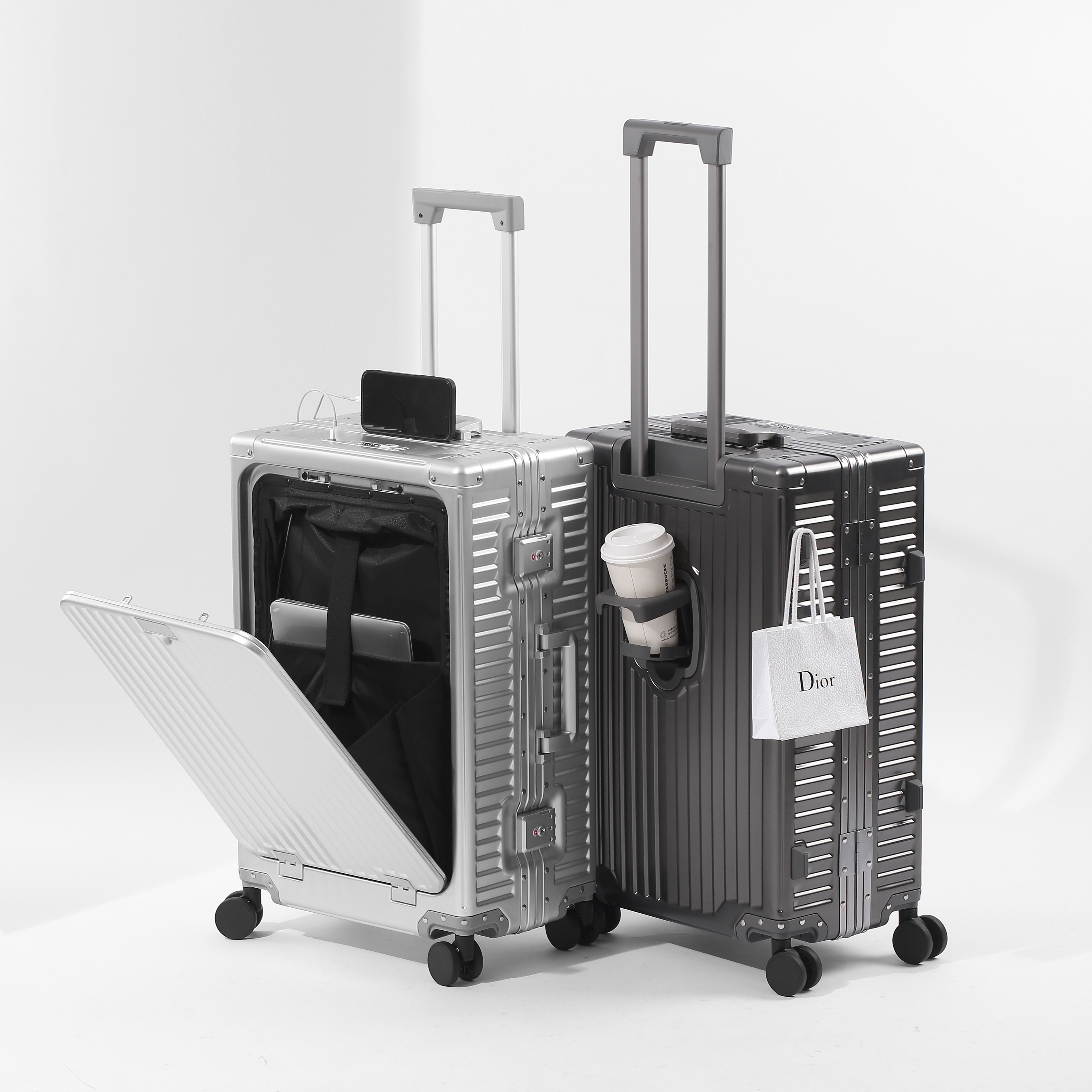
When sourcing a suitcase in bulk, the stakes are considerably higher than a single retail purchase. Procurement managers, travel goods distributors, and corporate buyers must evaluate multiple suppliers across dimensions ranging from material quality and manufacturing consistency to pricing structures and delivery timelines. A wrong supplier decision can result in delayed shipments, inconsistent product quality, and damaged brand reputation — particularly when hundreds or thousands of units are involved. Understanding how to systematically compare suitcase suppliers is therefore not just a procurement task; it is a strategic business decision.
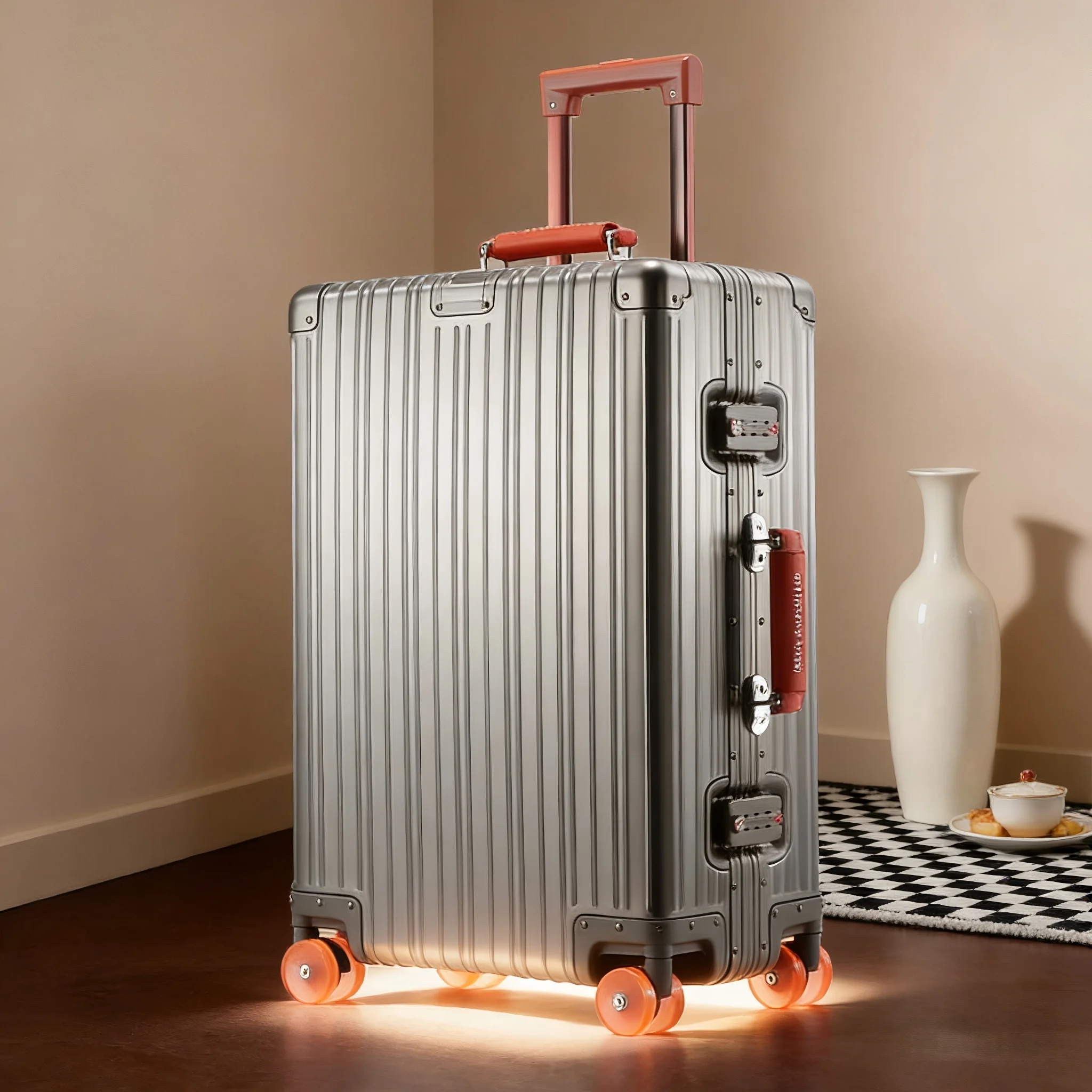
The global luggage market is highly competitive, with manufacturers operating across different tiers of quality, technology, and service capability. A reliable suitcase supplier must not only deliver functional products but must also align with your brand standards, compliance requirements, and long-term supply chain goals. This guide provides a structured framework that procurement professionals can apply when evaluating and comparing suitcase suppliers before committing to a bulk order.
Understanding Your Bulk Suitcase Requirements Before You Compare
Defining Product Specifications and Category Needs
Before any supplier comparison can begin, your procurement team must establish a precise set of product requirements. This means deciding on the type of suitcase needed — whether it is a hardshell aluminum travel case, a soft-sided polycarbonate model, or a business trolley variant. Each category demands different manufacturing capabilities and material sourcing, which directly affects which suppliers are qualified to fulfill the order.
Specification details such as shell material, frame construction, wheel configuration (spinner vs. two-wheel), lock type, handle design, and interior lining all influence supplier selection. For instance, a full-aluminum suitcase with a password lock and spinner wheels — a premium business travel segment — requires a manufacturer with precision metalworking and quality finishing capabilities. Documenting these specifications upfront allows you to filter out suppliers who cannot meet baseline requirements before investing further evaluation time.
Capacity and sizing also matter at the bulk level. If your order includes multiple sizes — say 20-inch cabin cases alongside 28-inch large-capacity checked suitcases — you need to confirm that the supplier has mold consistency across the full range. Inconsistent sizing creates returns, customer complaints, and SKU management complications.
Setting Volume, Budget, and Timeline Expectations
Bulk suitcase orders vary widely in volume from a few hundred units to tens of thousands. Your expected order quantity significantly affects which suppliers are viable partners. Some manufacturers have minimum order quantities that may be too high for mid-sized buyers, while others operate at high-volume capacities that deliver economies of scale unavailable to smaller workshops.
Establishing a realistic budget per unit before supplier outreach helps eliminate mismatched expectations early. Premium suitcase models — those featuring full-aluminum construction, reinforced corner guards, multi-directional spinner wheels, and TSA-approved locks — naturally command higher unit costs than basic polypropylene models. Your budget must reflect the actual product tier you are targeting, or supplier negotiations will stall before they start.
Delivery timelines are equally critical. Bulk suitcase orders often have lead times that span four to twelve weeks depending on production scheduling, customization requirements, and shipping logistics. If your launch window is fixed — for a corporate gifting campaign or a seasonal retail push — you must communicate these constraints upfront and evaluate suppliers based on their confirmed production capacity within your timeline.
Key Supplier Evaluation Criteria for Suitcase Bulk Orders
Manufacturing Capability and Quality Control Standards
One of the most critical factors when comparing suitcase suppliers is the depth and transparency of their manufacturing capability. A credible manufacturer should be able to demonstrate in-house production processes rather than relying entirely on third-party subcontractors. When suppliers maintain direct control over their production line, they can more reliably enforce quality standards and respond to customization requests.
Quality control documentation is a meaningful differentiator. Reputable suitcase manufacturers will hold certifications such as ISO 9001 for quality management systems, and their products may carry compliance marks relevant to key export markets. For travel goods entering markets in Europe, the US, or Japan, adherence to relevant luggage standards — covering tensile strength, wheel durability, handle load-bearing, and frame impact resistance — is not optional. Always request quality control reports, production audit documentation, and sample test results as part of your evaluation.
The ability to perform drop tests, vibration tests, and wheel durability tests in-house or through a certified third-party lab signals a serious suitcase producer. Suppliers who can provide empirical test data for their products are generally more reliable partners for bulk orders than those who provide only aesthetic samples without performance documentation.
Material Sourcing and Construction Details
The materials used in a suitcase determine its durability, weight, aesthetic appeal, and ultimately its retail value. When comparing suppliers, always investigate where and how they source their core materials. An aluminum suitcase supplier, for example, should be transparent about the grade of aluminum used, the extrusion or stamping methods employed, and the surface treatment process (anodizing, brushing, or powder coating).
For hardshell suitcase models using polycarbonate or ABS, the blending ratio of materials affects impact resistance and flexibility under pressure. Suppliers who maintain proprietary compound formulations or work with established material suppliers tend to deliver more consistent product quality across large production runs. Ask for material datasheets and press the supplier to explain how they manage batch-to-batch consistency.
Wheel and handle components often receive insufficient attention during supplier evaluation. The suitcase wheel system — particularly multi-directional spinner assemblies — is one of the highest-wear components and a common source of end-user complaints. A quality supplier will source branded or precision-engineered wheel systems, not commodity knock-offs. Similarly, retractable handles should be evaluated for locking consistency, load rating, and ergonomic grip quality. Suppliers who invest in these details signal a higher baseline of product engineering.
How to Assess Pricing, MOQs, and Commercial Terms
Interpreting Supplier Pricing Structures
Price comparison across suitcase suppliers is rarely straightforward. A lower quoted unit price can mask hidden costs in tooling fees, packaging charges, customization surcharges, or freight terms. When collecting quotes, always request itemized pricing that separates production cost, packaging, labeling, and export documentation fees. This allows for meaningful like-for-like comparison across suppliers at different price points.
Volume tiering in suitcase pricing is standard practice. Most manufacturers will offer better per-unit rates at higher order quantities, but the specific breakpoints and discount percentages vary widely. Some suppliers offer aggressive price breaks at relatively low volumes, while others maintain flat pricing until significantly larger batches are ordered. Understanding the price-volume relationship helps buyers determine whether a supplier's pricing structure aligns with their growth trajectory.
Beware of suppliers whose pricing is significantly below market benchmarks for the stated suitcase specifications. Abnormally low quotes often indicate cost-cutting on materials, labor conditions, or quality control processes — risks that may not become visible until post-delivery, when defective units reach your customers. Price reasonableness relative to product specification is a key indicator of supplier credibility.
Evaluating Minimum Order Quantities and Payment Terms
Minimum order quantity requirements differ substantially between suitcase suppliers. Large-volume factories may impose MOQs of 500 or 1,000 units per SKU, while mid-sized or specialized producers may accommodate orders as low as 100 units. For buyers testing a new suitcase model or entering a new market, suppliers with lower MOQs provide flexibility, even if the unit economics are slightly less favorable.
Payment terms in bulk suitcase transactions are a critical commercial dimension. The typical arrangement involves a deposit (commonly 30%) at order confirmation, with the balance settled before shipment. However, experienced buyers often negotiate more favorable terms — such as lower deposits, deferred payments, or letter of credit arrangements — especially once a track record is established. Evaluate suppliers not only on their initial terms but on their willingness to accommodate commercially reasonable adjustments as the relationship develops.
Trade finance options, escrow-based platforms, and third-party quality inspection clauses are all tools that reduce financial risk in bulk suitcase transactions. Suppliers who are open to third-party pre-shipment inspection demonstrate confidence in their product quality and respect for buyer risk management needs.
Verifying Supplier Reliability and Long-Term Partnership Potential
Conducting Due Diligence on Supplier Background
Before placing a bulk suitcase order, thorough due diligence on a supplier's background is non-negotiable. This includes verifying the supplier's business registration, production facility ownership versus third-party sub-contracting arrangements, and export history. A suitcase manufacturer with a verifiable export track record to major markets is a fundamentally safer partner than an unknown entity with unverifiable claims.
Requesting and verifying customer references is a practical step that many buyers overlook. A credible suitcase supplier serving the B2B market should be able to provide references from current or former buyers operating in similar segments. While direct competitor references are unlikely, references from non-competing industries or regions can still provide valuable insight into the supplier's delivery reliability, responsiveness, and post-sale support.
Factory audits — either in-person or through a reputable third-party auditing firm — provide the most comprehensive verification of supplier capability. Audits examine production capacity, equipment quality, workforce practices, environmental compliance, and quality management systems. For suitcase orders above a certain value threshold, a factory audit is a worthwhile investment that can prevent costly failures down the line.
Evaluating Customization Support and OEM/ODM Capability
Many bulk suitcase buyers require branding customization — including private label logos, custom colorways, branded lining, or proprietary design elements. A supplier's OEM (original equipment manufacturer) and ODM (original design manufacturer) capability is therefore a meaningful criterion when the buyer wants differentiated products rather than generic off-the-shelf models.
Ask potential suppliers for their customization process, including how they handle design approvals, sample iterations, and color matching. A well-organized suitcase manufacturer will have a defined sampling workflow, clear timeline commitments for pre-production samples, and documented revision procedures. Vague or inconsistent answers about the customization process are a warning sign that the supplier may lack the systems needed to manage complex OEM orders reliably.
If you require a suitcase that combines premium materials — such as a full-aluminum shell with a leather handle and a business-grade password spinner — look for suppliers who have active product development teams and existing production tooling for similar configurations. Products like the suitcase variants designed for business travel demonstrate the kind of integrated engineering and finishing quality that bulk buyers in the premium segment should seek in a supplier.
Sampling, Trial Orders, and Supplier Shortlisting
Requesting and Evaluating Pre-Production Samples
No bulk suitcase order should be placed without first evaluating a pre-production sample. Samples allow buyers to physically assess the product against specifications, verify material quality, test functional components such as locks and wheels, and confirm aesthetic consistency. A sample also serves as a contractual reference point — once approved, the production batch should match the sample in all specified dimensions.
When evaluating a suitcase sample, assess it systematically across categories: structural rigidity, surface finish quality, hardware function (zippers, locks, extendable handles), interior lining attachment, wheel rotation smoothness, and weight. Document your findings in a structured evaluation form so that you can compare samples from multiple suppliers on an objective, consistent basis.
Be cautious of suppliers who provide marketing-grade display samples that are hand-finished to a higher standard than their production line output. Request production samples — units pulled directly from the regular manufacturing run — rather than specially prepared showroom samples. This distinction is important and worth specifying explicitly in your sample request.
Running Small Trial Orders Before Scaling
Even when a suitcase supplier performs well across all evaluation criteria and delivers strong samples, placing a small trial order before committing to full-scale volume is sound procurement practice. Trial orders typically represent 10–20% of the intended full order quantity and allow the buyer to verify production consistency, packaging quality, labeling accuracy, and on-time delivery performance under real commercial conditions.
Trial orders also test the supplier's communication quality and responsiveness during the production and shipping process. A supplier who maintains proactive updates, flags potential issues early, and resolves logistics challenges efficiently during the trial phase is a strong indicator of a reliable long-term suitcase supply partner. Conversely, a supplier who goes quiet post-order or provides evasive answers about production status is exhibiting early warning signs of poor partnership quality.
After the trial order is received and inspected, conduct a formal internal review that scores the supplier against your evaluation criteria. This creates an objective shortlist of qualified suitcase suppliers and provides a documented basis for your final selection decision — one that can be reviewed and updated as your supplier base evolves.
FAQ
What is the most important factor when comparing suitcase suppliers for bulk orders?
Manufacturing capability and quality control consistency are arguably the most critical factors. A suitcase supplier who can demonstrate certified manufacturing processes, provide empirical test data, and maintain quality across large production runs offers the most reliable foundation for a bulk order relationship. Price matters, but it should never override quality verification.
How many suitcase suppliers should I compare before making a decision?
Most procurement professionals recommend creating an initial longlist of five to eight suitcase suppliers, then narrowing to two or three after initial screening. This approach balances thoroughness with efficiency. Comparing too few suppliers risks missing better options, while comparing too many disperses your evaluation effort and extends the timeline unnecessarily.
Is it necessary to visit a suitcase supplier's factory before placing a bulk order?
For high-value bulk orders, a factory visit or third-party factory audit is strongly recommended. It provides direct verification of production capability, workforce conditions, equipment quality, and quality management systems. If a physical visit is not feasible, commissioning a professional third-party audit through a reputable inspection company is the next best alternative and should not be skipped for significant order volumes.
How can I protect against quality issues in a bulk suitcase order?
The strongest protections include requiring pre-production sample approval, specifying a third-party pre-shipment inspection clause in your purchase contract, and defining clear defect rate tolerances and remediation terms. Using escrow or trade finance payment structures also provides financial leverage if quality commitments are not met. These safeguards, applied together, significantly reduce the risk of costly quality failures in bulk suitcase procurement.
Table of Contents
- Understanding Your Bulk Suitcase Requirements Before You Compare
- Key Supplier Evaluation Criteria for Suitcase Bulk Orders
- How to Assess Pricing, MOQs, and Commercial Terms
- Verifying Supplier Reliability and Long-Term Partnership Potential
- Sampling, Trial Orders, and Supplier Shortlisting
-
FAQ
- What is the most important factor when comparing suitcase suppliers for bulk orders?
- How many suitcase suppliers should I compare before making a decision?
- Is it necessary to visit a suitcase supplier's factory before placing a bulk order?
- How can I protect against quality issues in a bulk suitcase order?