
 EN
EN

Choosing the right suitcase luggage is not simply a matter of picking a color or a size. For frequent business travelers, procurement officers, and retail buyers, the quality of suitcase luggage directly determines how well it performs under real-world conditions—checked baggage handling, long airport walks, security inspections, and repeated trips. A poorly constructed piece can fail within a few months, while a well-engineered one delivers years of reliable service. This article breaks down exactly what buyers should inspect when evaluating the quality of suitcase luggage.
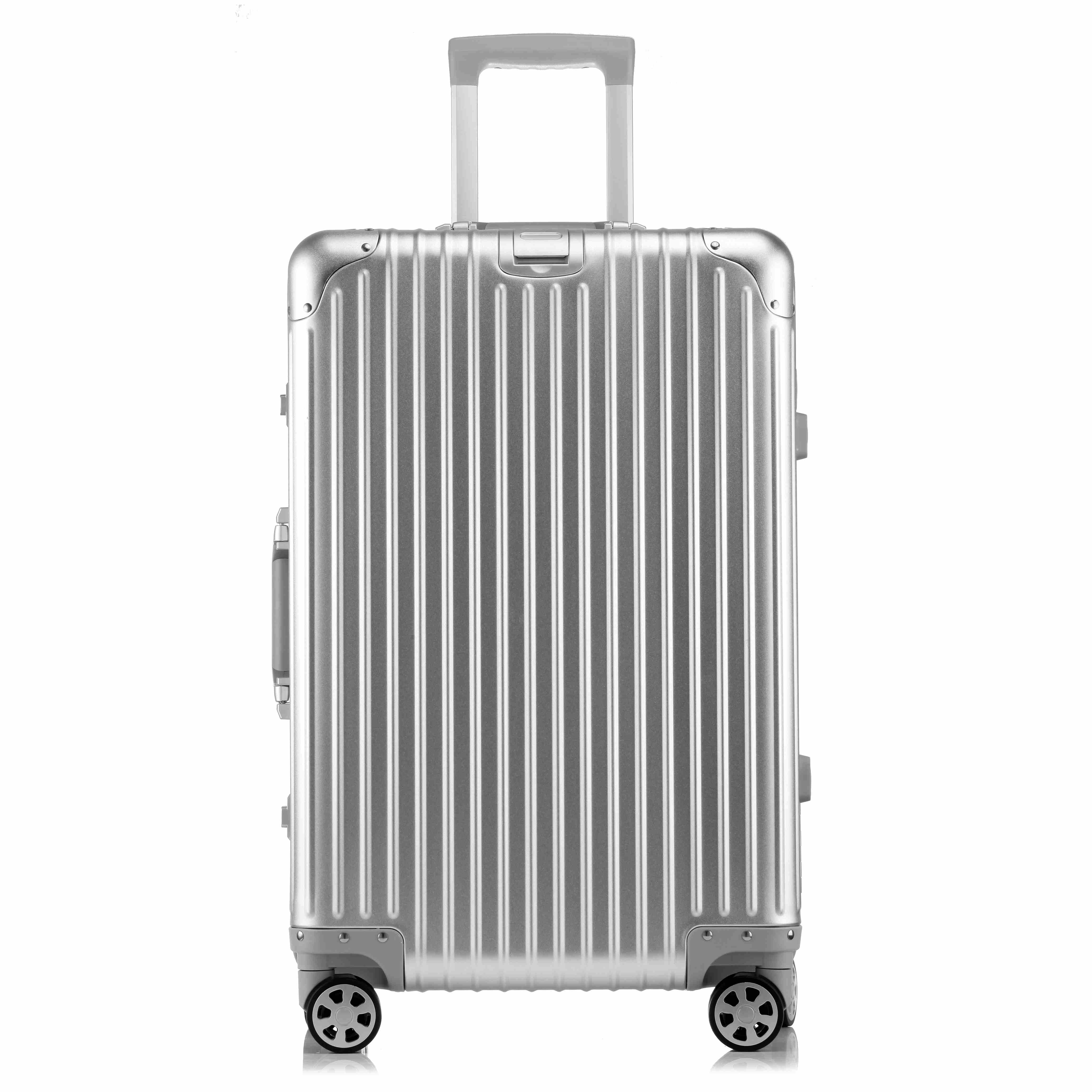
Quality in suitcase luggage is multidimensional. It encompasses the shell material, the wheel system, the locking mechanism, the handle construction, and even the interior organization features. Each of these components interacts with the others to deliver—or undermine—the overall travel experience. Buyers who understand these quality dimensions are far better positioned to source products that satisfy end users, minimize returns, and justify price points. The following sections provide a structured guide to the most important quality indicators every suitcase luggage buyer must know.
Shell Material and Structural Integrity
Hard-Shell vs. Soft-Shell Construction
The outer shell is the first line of defense for any suitcase luggage. Hard-shell constructions, typically made from polycarbonate, ABS, aluminum alloy, or a combination of materials, offer high resistance to impact, crushing, and moisture. Soft-shell designs made from nylon or polyester offer more flexibility and expandability but are generally less protective against rigid impacts. For business travel and premium segments, hard-shell suitcase luggage is the dominant choice due to its clean aesthetic and robust protection.
Aluminum hard-shell suitcase luggage represents the highest tier in material quality. All-aluminum constructions offer exceptional rigidity, a premium appearance, and excellent resistance to both impact and environmental wear. When buyers examine an aluminum suitcase luggage, they should look for uniform panel thickness, clean weld seams or precise rivet placements, and a consistent finish across the entire surface. Any visible warping, rough edges, or uneven paneling signals substandard manufacturing.
Polycarbonate shells, while lighter than aluminum, must be evaluated for their flex-and-return quality. A high-quality polycarbonate shell will flex slightly under pressure and return to its original shape without cracking. Buyers should apply light pressure to different areas of the shell to test this property. Brittle shells that crack rather than flex indicate low-grade material blends that will fail quickly in transit environments.
Frame and Hinge Construction
The frame around the opening perimeter of the suitcase luggage is a structural critical point. Frames on quality pieces are made from aluminum or reinforced steel and should feel solid when pressed or twisted. A flimsy frame that bends easily under light torsion pressure is a red flag—it will warp under baggage handling forces and prevent the shell halves from closing properly over time.
Hinges connect the two shell halves and must sustain thousands of open-and-close cycles. On premium suitcase luggage, hinges are typically concealed within the shell structure or protected by metal reinforcement. Exposed plastic hinges that are simply clipped onto the frame represent a cost-cutting measure that significantly reduces longevity. Buyers should open and close the case several times, feeling for any looseness, misalignment, or resistance that suggests poor hinge fitting.
Wheel System Quality and Mobility
Spinner Wheel Design and Construction
The wheel system is arguably the most performance-sensitive component of any suitcase luggage piece. Modern suitcase luggage predominantly uses four-wheel spinner configurations that allow 360-degree rotation. However, not all spinner wheels are created equal. Buyers should evaluate wheel diameter, bearing quality, housing material, and the smoothness of rotation under loaded conditions.
Larger wheel diameters—typically 50mm or above—roll more smoothly over uneven surfaces such as cobblestones, tiled floors, and carpeted airport terminals. Smaller wheels may perform well on smooth surfaces but struggle in real-world conditions. The wheel housing should be made from high-impact plastic or metal, not thin injection-molded plastic that cracks under load. Spin the wheels by hand and listen for grinding or uneven resistance, both of which indicate low-quality bearings.
The wheel axle attachment to the suitcase luggage base is another critical inspection point. On quality pieces, the wheel assembly is bolted or riveted directly into reinforced sections of the shell frame. On lower-quality products, wheels are attached with simple screws into the shell material itself, which tends to strip or crack after repeated stress. Buyers should press down on the wheel housing and simulate load stress to detect any flex or instability at the attachment point.
Wheel Housing and Floor Protection
Quality suitcase luggage pays attention to where the case rests when upright. Corner bumpers or foot protectors on the bottom of the case prevent the shell from direct floor contact and protect the surface finish. These small details are often absent on lower-tier products. Check whether the floor-facing surface has rubber or plastic bumpers that are securely attached rather than lightly glued.
Wheel recesses or protective lips around the wheel housing prevent wheel damage during rough handling. On well-engineered suitcase luggage, the wheel assembly sits within a recessed channel that shields it from direct impact when the case is dropped on its side or thrown onto a baggage carousel. This design detail extends wheel lifespan substantially and reflects thoughtful engineering investment.
Locking Mechanism and Security Standards
TSA-Approved Lock Integration
For business travelers and anyone flying through international airports, a TSA-approved lock is not a luxury—it is a functional necessity. TSA-compliant locks allow security personnel to inspect baggage without cutting or breaking the lock, using a set of master keys unique to the system. Any suitcase luggage lacking this feature creates unnecessary risk of lock destruction during security screenings. Buyers should verify that the lock is officially TSA-recognized, not merely marketed as compatible.
Beyond TSA compliance, buyers should evaluate the lock's build quality independently. The lock mechanism should engage with a firm, crisp click when set. The dials or buttons should rotate or press smoothly without feeling cheap or fragile. On high-quality suitcase luggage, the lock housing is recessed into the frame or protected by a metal surround that prevents it from being easily levered open. This is a detail found on products like the suitcase luggage designed specifically for business travel, where security and durability are the primary priorities.
The zipper-to-lock interface also matters. On cases that use zipper closures with lock loops, the zipper pulls must be made from metal, not plastic, and the lock loop must be stitched or riveted into the zipper tape itself rather than loosely attached. Plastic zipper pulls deform under tension and can be bypassed easily. Metal zipper hardware is a reliable marker of a quality-conscious product in the suitcase luggage category.
Frame Lock Systems on Aluminum Cases
Aluminum suitcase luggage often uses a central frame lock system rather than zipper closures. In these designs, two or three locking points secure the frame halves together through a unified mechanism. Buyers should test all locking points simultaneously to ensure that the frame closes evenly and completely without requiring excessive force. Misaligned locking points suggest either poor manufacturing tolerances or damage from transit during the inspection process.
The clasp mechanisms on frame-lock suitcase luggage should sit flush with the frame when locked and spring open cleanly when unlocked. Any sticking, misalignment, or rough operation during the inspection should be treated as a disqualifying defect. Premium aluminum suitcase luggage will have clasp mechanisms machined to tight tolerances, resulting in a satisfying, precise operation that reflects overall build quality.
Handle System and Ergonomic Performance
Telescopic Handle Durability
The telescopic handle is one of the highest-stress components on any suitcase luggage piece. It must support the weight of the case, endure twisting forces during maneuvering, and retract and extend reliably across thousands of cycles. Buyers should evaluate the handle's tube material—aluminum is superior to hollow plastic—and the mechanism that locks it at different height settings.
A quality telescopic handle on suitcase luggage locks firmly at each height setting with no play or wobble. Lateral wobble when the handle is extended and loaded is a common defect in lower-quality products and becomes significantly worse over time as the locking mechanism wears. Buyers should extend the handle to its maximum height, apply lateral pressure, and assess whether the tube shifts or rotates within its channel.
The handle grip itself should be ergonomically shaped, made from rubberized or foam-padded material, and wide enough to accommodate different hand sizes comfortably. Thin, hard plastic grips cause discomfort during extended travel and signal budget construction. On premium suitcase luggage products aimed at business travelers, the handle grip is often oversized and contoured to reduce hand fatigue during long terminal walks.
Top and Side Carry Handles
Most suitcase luggage also includes a fixed top handle and sometimes a side handle for lifting and repositioning. These handles must be stitched or riveted directly into the frame structure, not simply looped through the shell material. A handle that pulls out under load—a common failure point on cheap suitcase luggage—can cause the case to drop and damage both the contents and the case itself.
Test the top handle by lifting the fully loaded case with it and holding for several seconds, feeling for any stretching, flex, or creaking at the attachment point. On aluminum frame suitcase luggage, handles are typically bolted through the frame with visible hardware on the inside, providing a durable and reliable attachment. This kind of construction detail distinguishes products built for real travel from those built simply to look good on a shelf.
Interior Quality and Organization Features
Lining Materials and Stitching Standards
The interior of suitcase luggage is often overlooked during quality checks, but it reflects the manufacturer's overall approach to craftsmanship. The lining fabric should be made from durable polyester or nylon rather than cheap non-woven polypropylene that frays quickly. Run your hand across the lining and check for even stitching along all seams, secure attachment at the corners, and no loose threads or raw edges.
Interior dividers, zippered pockets, and compression straps should be firmly stitched and function without catching or jamming. On premium suitcase luggage, the compression straps use metal buckles rather than plastic clips, and the divider panels are thick enough to hold their shape rather than collapsing under light pressure. These details matter for buyers who are sourcing suitcase luggage for professional use cases where contents need to arrive wrinkle-free and organized.
Capacity and Expansion Mechanisms
Some suitcase luggage designs include expandable sections that increase interior capacity by several centimeters. When present, these expansion zippers must operate smoothly and the expansion fabric must be thick enough to resist tearing under the increased load. Test the expansion zipper across its full range and check whether the expanded section closes cleanly without bunching or fabric stress at the corners.
For non-expandable suitcase luggage, particularly frame-style aluminum cases, the interior space should be maximized relative to the exterior dimensions. Check the gap between the shell interior and the usable packing space—excessive shell thickness eating into interior volume is a design inefficiency. High-quality suitcase luggage engineering balances structural integrity with interior capacity through precise manufacturing rather than simply increasing shell thickness.
FAQ
What is the most important quality indicator to check in suitcase luggage?
While every component matters, the wheel system and handle construction are the most functionally critical elements in everyday use. These are the highest-stress components in suitcase luggage and the first to fail in lower-quality products. Buyers should test both under simulated load conditions during any quality inspection.
Is aluminum suitcase luggage significantly better than polycarbonate?
Aluminum suitcase luggage offers superior rigidity, premium aesthetics, and a longer structural lifespan compared to polycarbonate, but it is heavier. For business travelers prioritizing durability and appearance, aluminum is the superior choice. Polycarbonate is a reasonable alternative for buyers who prioritize lightweight performance and flexibility in their suitcase luggage.
How can buyers quickly assess suitcase luggage quality at a trade show or showroom?
Focus on four quick checks: spin all four wheels and listen for grinding, extend and wobble the telescopic handle, open and close the lock several times to feel precision, and press firmly on the shell corners to test rigidity. These four checks will reveal most quality differences between suitcase luggage products within a few minutes.
Does TSA lock certification matter for suitcase luggage sold in non-US markets?
TSA lock certification is increasingly relevant in global markets because many international airports use TSA-compatible master keys during inspections, particularly on routes with US connections. For buyers sourcing suitcase luggage for business travel or premium retail markets, TSA compliance is a widely recognized quality signal that adds perceived and functional value regardless of the primary market geography.
Table of Contents
- Shell Material and Structural Integrity
- Wheel System Quality and Mobility
- Locking Mechanism and Security Standards
- Handle System and Ergonomic Performance
- Interior Quality and Organization Features
-
FAQ
- What is the most important quality indicator to check in suitcase luggage?
- Is aluminum suitcase luggage significantly better than polycarbonate?
- How can buyers quickly assess suitcase luggage quality at a trade show or showroom?
- Does TSA lock certification matter for suitcase luggage sold in non-US markets?