For a luggage brand or importer, “custom” should mean more than printing a logo on an existing suitcase. A commercially successful product must fit its target user, retail price, sales channel, market requirements and expected service life. Decisions about the shell, frame, zipper, trolley system, wheels, lock, interior and packaging all affect cost and customer experience.
Jiaxing Linzhihang International Trade Co., Ltd., operating under the LADILATU brand, provides OEM and ODM luggage development in Pinghu, Zhejiang, one of China’s established luggage-industry clusters. Our product scope includes aluminum-magnesium alloy luggage, ABS, PC, PP and ABS+PC suitcases, student luggage, business travel luggage, machinery and equipment cases, and other project-based designs.
This guide explains our five-stage customization process and what buyers should prepare before requesting a quotation.
OEM is usually suitable when you already have a product specification, drawing, approved sample or detailed bill of requirements. The manufacturer develops and produces the suitcase according to that direction.
ODM is more suitable when you have a market concept but need design and engineering support. For example, you may know that you want a lightweight carry-on for business travelers, but still need help choosing the structure, material, component combination and visual direction.
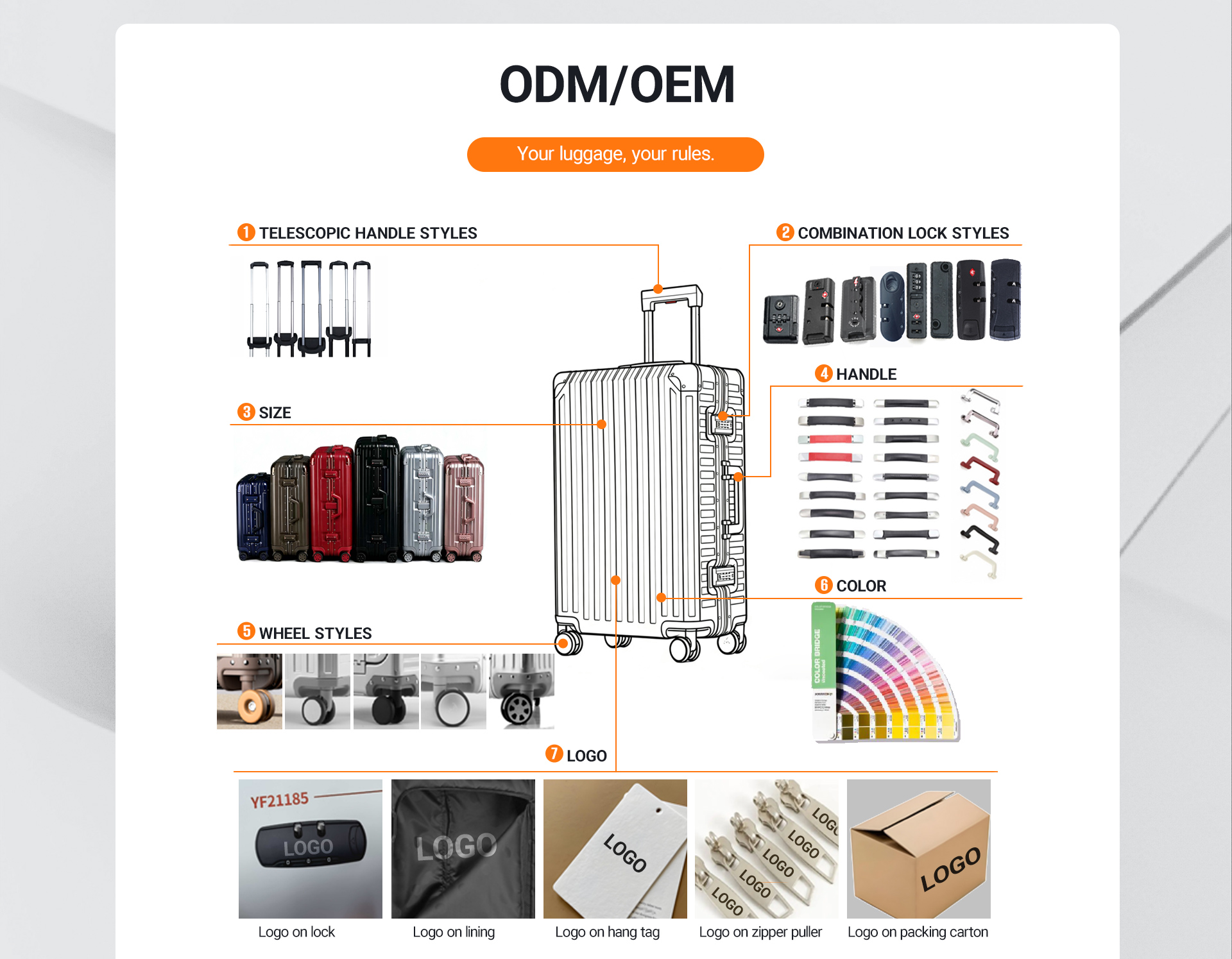
Many projects fall between the two. A buyer may select an existing structure, then customize its color, wheels, handles, lock, lining, logo and packaging. At the inquiry stage, tell the supplier which elements are fixed and where you welcome recommendations. This reduces unnecessary design rounds.
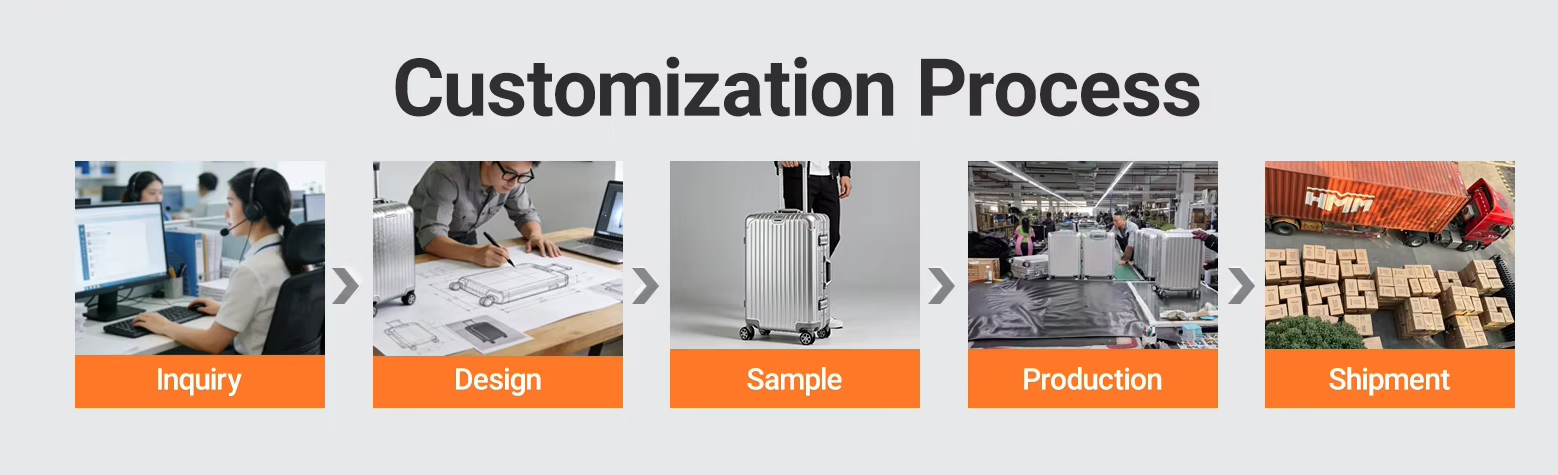
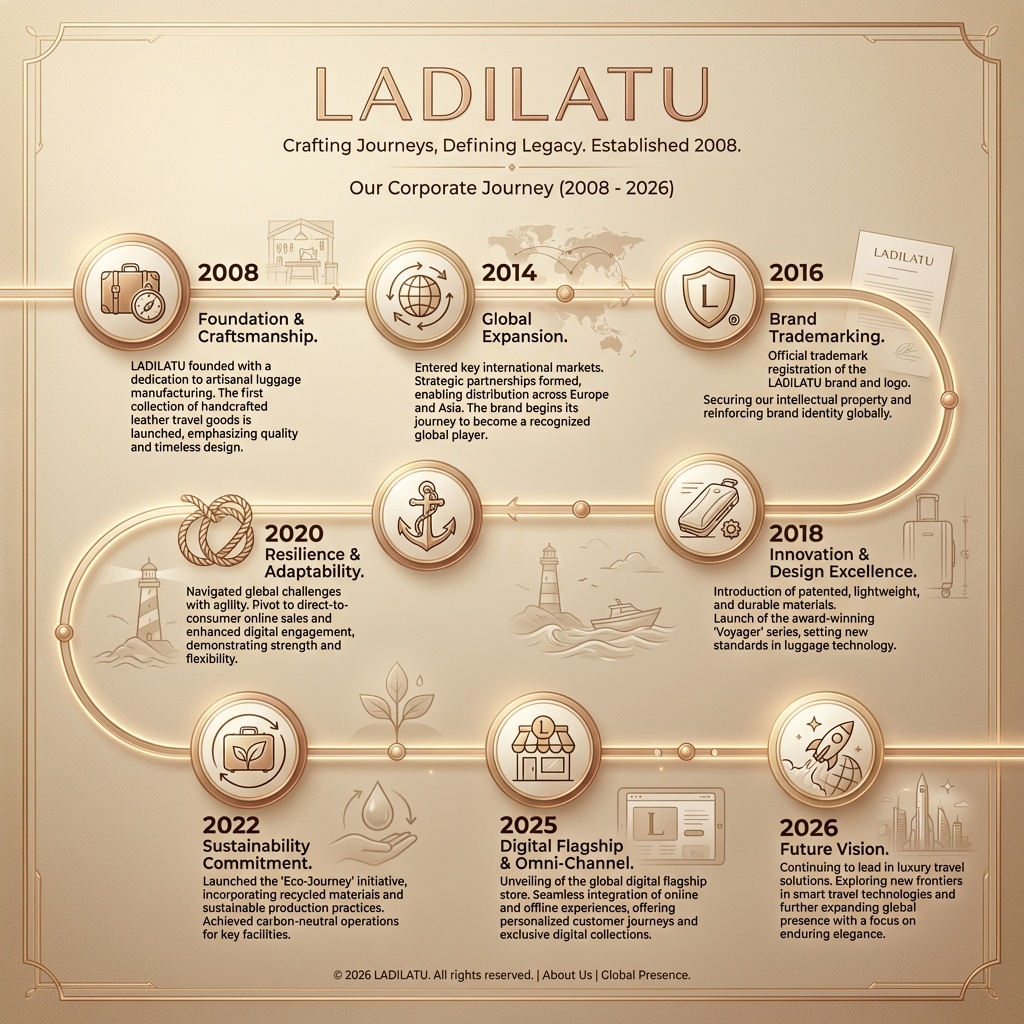
LADILATU’s five-stage customization workflow.
A useful inquiry includes the target market, customer group, sales channel, preferred sizes, expected order quantity, target price range, material preference, required features, branding files, packaging requirements and desired delivery window.
Do not begin with price alone. Two suitcases with a similar appearance can have different shell thicknesses, trolley systems, wheel constructions, locks, linings and test requirements. A quotation becomes more meaningful when the product specification is clear.
Our team reviews the brief and discusses feasible product directions. If important information is missing, we clarify it before design or sampling. Buyers should also identify any destination-market requirements that the product or its materials must meet. Compliance scope should be agreed project by project rather than assumed from a generic catalogue item.
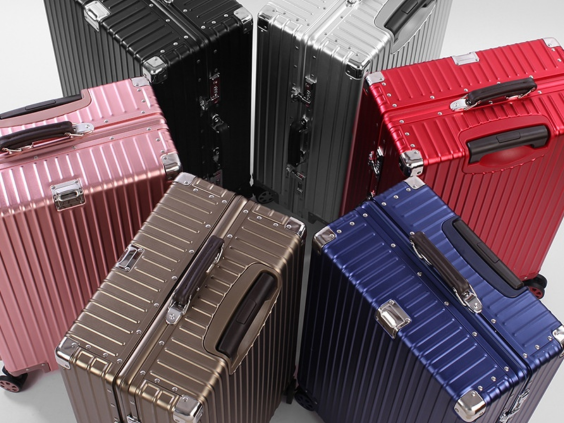
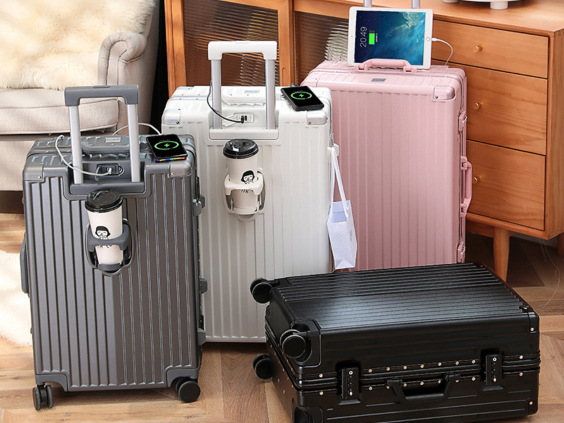
Depending on the project, customization may cover the exterior structure, size, material, telescopic handle, carrying handle, combination lock, wheel style, color, lining, zipper puller, hang tag and export carton.
The shell and structure should be selected first because they influence the remaining components. ABS and ABS+PC can support cost-sensitive programmes; PC may suit projects prioritizing impact performance and flexibility; PP has its own balance of resilience and weight; and aluminum-magnesium alloy creates a distinctive premium construction. The best option depends on the intended positioning, not on one material being universally superior.
Colors should be confirmed against a recognized reference such as a Pantone number, followed by a physical color sample where accuracy matters. Logo placement can include the lock area, lining, hang tag, zipper puller and packing carton, subject to the chosen construction and process. Buyers should provide vector artwork and define minimum size, color and clear-space rules.
The sample is the point at which drawings and specifications become a physical product. Review it systematically rather than relying on a quick visual impression.
Check the overall dimensions, usable capacity, product weight, shell appearance, color, logo size and position, trolley movement, handle comfort, wheel rotation, lock operation, zipper or frame alignment, lining workmanship and packaging. Record feedback in one consolidated document with annotated photos. Conflicting comments from several departments are a common source of delay.
The approved sample and final specification should become the reference for mass production. If a component changes after sample approval, document the change and confirm whether it affects price, testing or lead time.
LADILATU’s stated production resources include automated laser cutting, aluminum-alloy shell die-casting, vacuum forming, automated sawing and automated production lines, supported by a testing system. The relevant production route depends on the material and suitcase structure.
For buyers, quality control should not be treated as a final inspection only. Agree the approved materials and components, workmanship criteria, critical dimensions, functional checks, packaging method and inspection plan before production. Where destination-market testing or third-party inspection is required, define the standard, sample size, responsible party and acceptance criteria in writing.
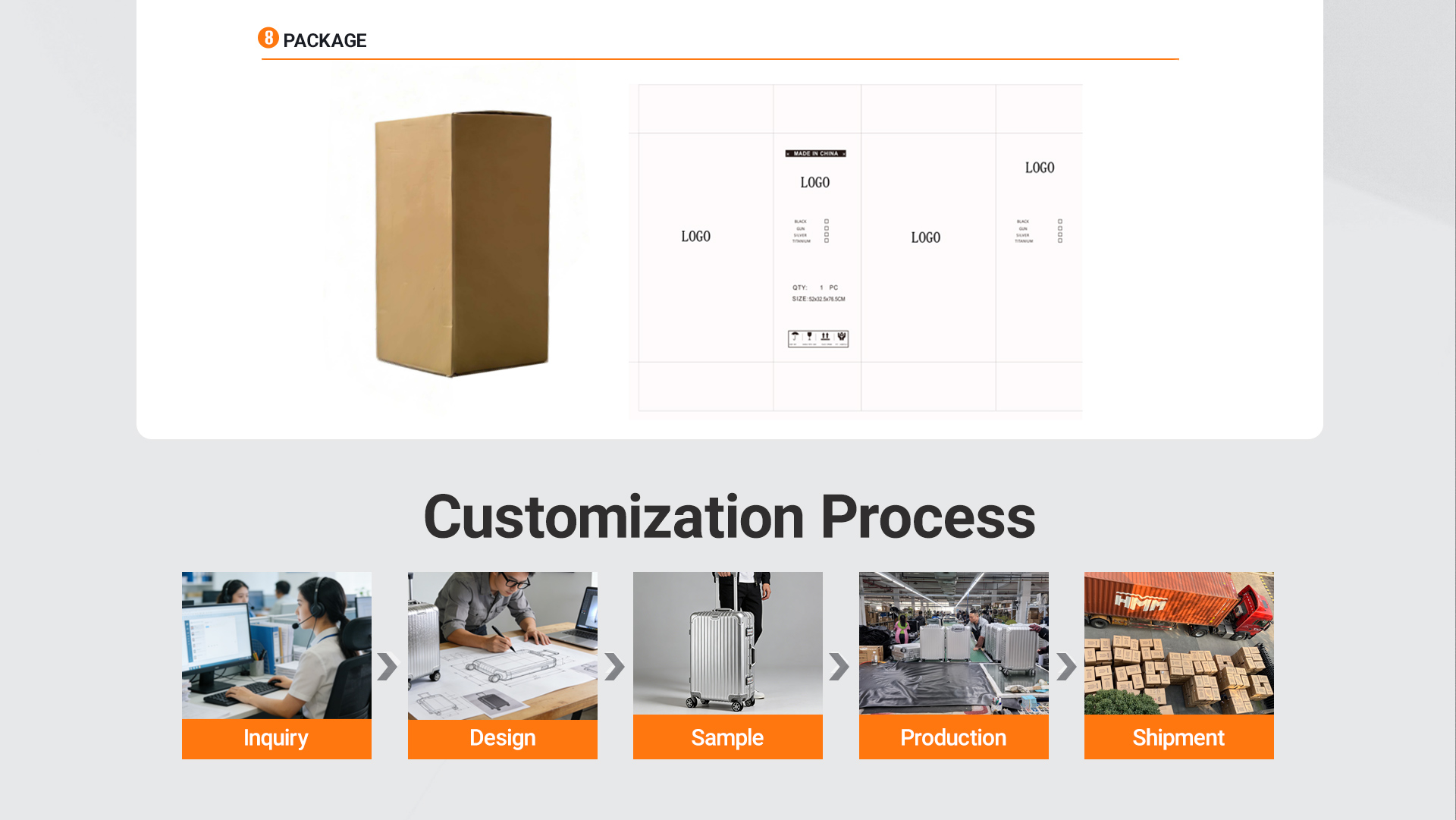
Packaging can be customized with the buyer’s logo, shipping marks, handling symbols and product information. Its job is not only presentation: it must also protect the suitcase during warehousing and international transport.
Before shipment, confirm carton dimensions, quantity per carton, labels, barcodes, shipping marks, documentation and loading requirements. Buyers using e-commerce fulfilment should disclose any channel-specific packaging or labeling rules early, because they may affect carton design and packing operations.
The fastest way to receive a useful proposal is to share a complete brief. Send us your target market, product type, sizes, estimated quantity, material or reference product, required features, logo file, packaging request, target price range and expected delivery date. If you do not yet have a final design, tell us what the product must achieve and our team can discuss an ODM direction.
Yes, a project may start from an existing structure and customize selected elements, subject to the model, process and order requirements.
The company provides design support including exterior structure, logo and color development. Feasibility, tooling and intellectual-property arrangements should be confirmed for each project.
Provide the product type, sizes, material, quantity, destination market, features, branding, packaging, target price range and required delivery window.

 EN
EN